
On the importance of sincere writing
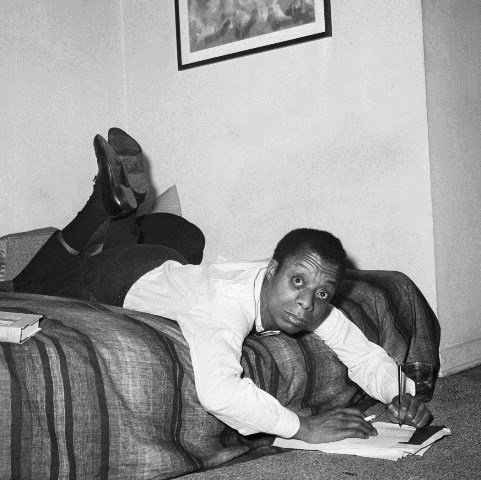
And yet, I could not escape the knowledge, though God knows I tried, that if I was still in need of havens, my journey had been for nothing. Havens are high-priced. The price exacted of the haven-dweller is that he contrive to delude himself into believing that he found a haven. It would seem, unless one looks more deeply at the phenomenon, that most people are able to delude themselves and get through their lives quite happily. But I still believe that the unexamined life is not worth living: and I know that self-delusion, in the service of no matter what small or lofty cause, is a price no writer can afford. His subject is himself and the world and it requires every ounce of stamina he can summon to attempt to look on himself and the world as they are.
- James Baldwin, from the introduction to Nobody Knows my Name: More Notes of a Native Son
The temperature has gone past 30 degrees this week and that is too much for me. Other than late night dog walks, I have avoided the outside for two days straight now, confining myself and Cooper to my front room, away from the unholy glare of the sun. Having finished the little work I had on last week, this week has been spent reading, listening to podcasts, looking for work and watching the odd game from the MAGA World Cup—something that I’ll be sharing my thoughts on once the tournament ends three long weeks and three days from now.
A note on the heat before I get into the quoted words of Baldwin: UK heat is something else. I have been abroad before, to places like Italy, Spain and Greece, and 30 degrees there feels quite nice. 30 degrees in the UK is like being slowly baked. The air is thick and the breeze is warm, and the sweat on your body sticks like dried Coca-Cola. Many people who have come to the UK from warmer climes have also observed the extremity of discomfort that is UK heat—see #greathumbling on TikTok for details.
Now if this had no wider relevance then I wouldn’t waste your time, dear reader, on my paltry struggles to keep reasonably cool. But as those on TikTok have pointed out, it isn’t just the smothering humidity itself, but the fact that the UK has no basic infrastructure in place to cope with such high temperatures. There is no air con, for example. Anywhere. Houses are built to keep the heat in—proof if you need it of the abnormality that is thirty-plus degree temperatures here. We just don’t get such heat on regular basis even in summer. Or at least, we never used to.
I need my climate back. The mild Autumns, the cold Winters, the tepid Springs, the warm (not scorching) Summers, broken up frequently by summer rain.
One of many concerns when thinking about the current state of things and near certainty that things are only going to get worse is the diminishing number of options when it comes to finding a haven. If it wasn’t enough to suffer the societal collapse brought on by neoliberal capitalism, and to endure the tyranny of the war mongers and criminals who lord over us, then the climate crisis threatens to leave few options for so many.
The Baldwin quote that opens this piece makes me think twice about the legitimacy of that concern, shedding light on perhaps the ultimate flaw in atomised societies—that of individual self-centredness. Though I think it is understandable and possibly natural, even, for human beings to seek out a haven for themselves, away from conflict, or hardship, or troubles, there is also the possibility that we are, all of us, on some level, responsible for the current condition.
But this responsibility cannot be directly applied to us—the atomised individuals. We can’t be too hard on ourselves. Such is the genius of individualist thought. Promoted by conservatives and liberals alike, and so widely popular because it appeals to that desire in human beings for a stress-free life, the dominant mantras within the atomised societies of capital are ones that insist on individual responsibility and emphasise on individual choice. We are conditioned, almost, to not wanting to interfere. On an individual level, perhaps, relating to the trivial matter, this is fine. But on that same level, there are concerns about challenging people on their behaviours, the comparative ease to which we can just mind our own business. On a larger scale, this translates to helplessness. What can I do about the genocide taking place half a world away, even if the nation state to which I am a citizen plays a big role in enabling it? What can I do about the injustices of the world? What on earth can I alone do about the climate crisis?
These are all valid questions that have one answer—nothing. There is nothing that you or I alone can do other than to bring concerns to the attention of others; something that more often than not equates to pissing in the wind.
Or does it?
In our hyper-propagandised time of mass media, and with the continuing dumbing down of political discourse due to the influence of platforms such as X, the act of communicating with others through the written word has become a battlefield beyond opposing schools of thought, one increasingly dominated by the dishonest and the insincere. It is important, I feel, that the creative writer practices sincere writing, informed by personal experience or individual thoughts/depictions of the atomised society. This is no time for escapism. Escapist slop within creative writing is the vanguard of consumer society. This includes Netflix and Netflixesque movies or TV shows.
As Baldwin notes, albeit in disappointingly gendered language of patriarchy, the writer is at their best when writing in sincerity, even when writing fiction. As I wrote a few weeks ago, this doesn’t mean writing only of yourself specifically, or from your own memory of events/instances from your own life. It means facing the world, confronting it, depicting it without bias or judgement, going to places you may not even want to go. The story is bigger than you, fellow writer. Your duty is to tell your story with honesty, as it is, and that of the world itself.
