
'Write what you know' does not translate to write only about you and your own life. Chill out.
While I’m not the biggest fan of autofiction I’m not tyrannically opposed to it either. In my own writing, I got perilously close to autofiction in the Young Mancunians story, ‘The Rain’. I put this down to the fact that the book came about at a crossroads period in my life. We all have, or will have, these moments, where we assess where we are, what we’ve done, and agonise over any regrets.
Anyway, ‘The Rain’ includes two scenes based on real-life events from many, many years ago. I included these as a kind of homage to my friends because a) they’re hilarious, and b) they’re good stories in their own right.
But it would be difficult for me to write an entire piece of autofiction (short-fiction-sized, let alone novel-sized) simply because my life hasn’t been that eventful. I’m a simple guy who likes simple things, spending time solely with the people I like. Which means, at the moment, I’ll never be out in a group of more than 5.
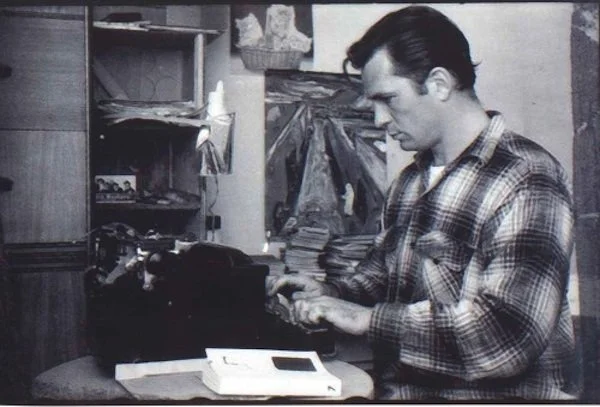
To get an idea of what good autofiction looks like, I suppose the obvious is the work of Jack Kerouac, particularly On the Road. Ironically, I don’t find Kerouac’s stories that interesting. For me, the interesting thing about Kerouac, and the reason why I can stick out a Kerouac novel, is the writing style which I obsessively tried to replicate for too long a time.
And its not because I find Kerouac’s stories necessarily dull. To be honest, its not something I can put my finger on. Same with the other famous Beat, Allen Ginsberg. There are poems of Ginsberg that I love, such as Howl and America, but the bulk of his work is, for me, all a bit over the top.
Oh, just realised I forgot to mention Burroughs when talking about famous Beats. I fucking despise Burroughs.
Back to the point. My interest with the Beats is purely aesthetical, I think. As mentioned, I like the style of writing, and the philosophy behind the style. I’m fascinated with the way they lived and the segment of 1950s America they inhabited. They’re lives (and I don’t think many would disagree with this) were book-worthy, in the sense that they made good stories and had a point to them, in that they had cultural relevance.
What do I mean by that?
The Beats lived during a transformative decade and were part of a generation who embodied that transformation. Kerouac was clearly aware of this. In the context of 1950s America, it could be said that the Beats were brave, even heroic. Consider Ginsberg’s Howl, the obscenity trial it was subject to, and the widespread homophobia of the time. Undoubtedly, the Beats were part of something else, existing outside of regular, acceptable society, a society that was dying. To have testimony from this period in the form of autofiction is historically meaningful. This is what I mean by saying the stories have a point to them. They’re relevant. At the time, they were an insight into what was going on within a cultural movement. Reading something like On the Road now is to gain some understanding into the story of America, and Western culture as a whole.
There is a difference, then, in what Kerouac was writing about and the ethos of ‘write what you know’. Though attributed to Mark Twain, my introduction to ‘write what you know’ came from Notorious B.I.G. of all people. If I remember rightly, he was explaining why his songs were all about criminality and life in the ghetto.
To explain it succinctly, ‘write what you know’ is about authenticity. For example, I would struggle to write a convincing novel about a Nigerian police detective, having never been to Nigeria, and having never served in the police, or the trials and tribulations of rich white women going through a messy divorce, having never been rich, and being not a woman. And it is painfully obvious when a writer is attempting to write about something they know nothing about, or have experience of.
This is where it gets a little complicated. What about sci-fi? What about horror?
‘Write what you know’ doesn’t eradicate the possibility to write great genre fiction. But it is crucial that a writer of genre fiction produces an air of authenticity in their characters and their themes. I would argue that theme is key here. You simply need to know what you’re talking about, and be genuinely invested in talking about it. It is less about providing entertainment, or escapism, and more concerned with what good fiction should do - provide insight into the human condition.
